


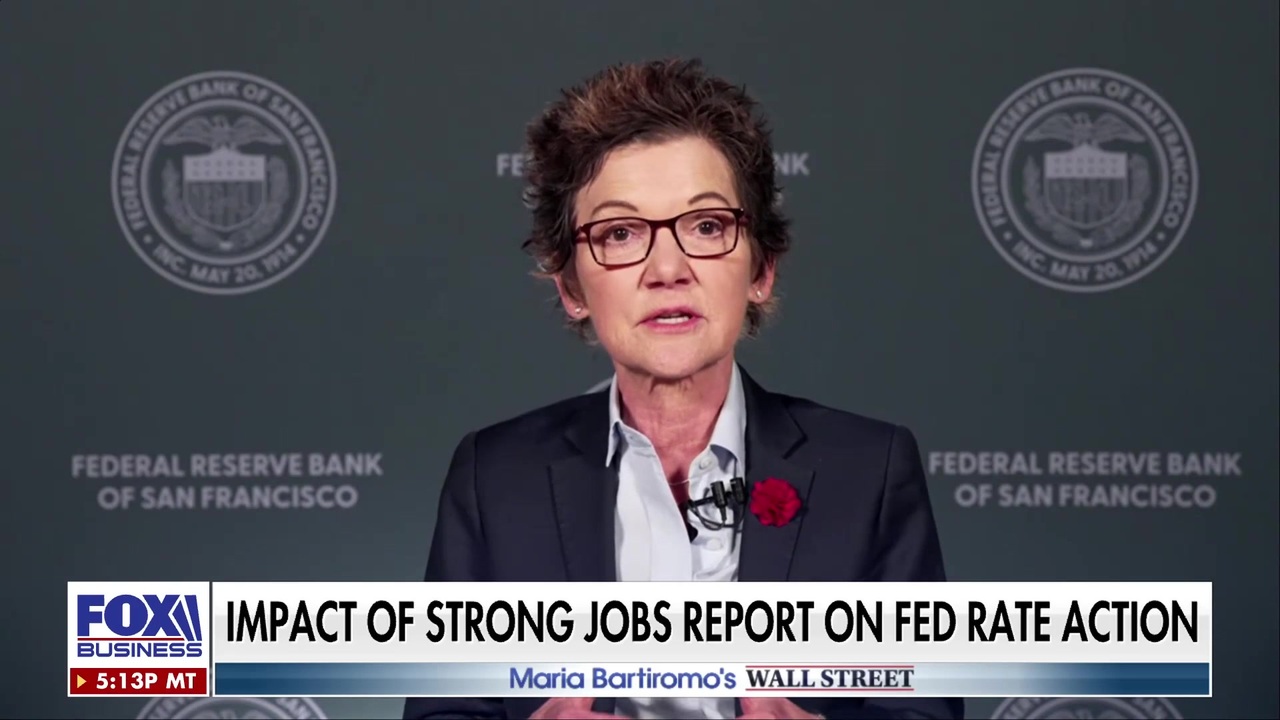
Steady March jobs report gives Federal Reserve time to balance risks
Federal Reserve Bank of San Francisco president Mary Daly analyzes the March jobs report, the impact of the Iran conflict on inflation and more on ‘Maria Bartiromo’s Wall Street.’
President Donald Trump on Friday touted the unexpectedly high March jobs report following job losses in February.
"A very happy and blessed Good Friday to all, especially to the 186,000 Americans who gained Private Sector jobs in the month of March alone!" the president wrote on Friday. "My Economic Policies have created an enormously powerful engine of Economic Growth, and nothing can slow it down."
Trump added that "Factory Construction Jobs are soaring as a result of the rapid Onshoring and surging Investment that TARIFFS have generated, all while the Trade Deficit has shrunk by 52% in a year!"
The U.S. added 178,000 jobs in March, which includes 8,000 government job losses, according to the Bureau of Labor Statistics.
LIZ PEEK: TRUMP’S ECONOMIC WINS ARE REAL — NOW HE NEEDS TO CONVINCE THE COUNTRY

President Donald Trump on Friday touted the unexpectedly high March jobs report following job losses in February. (AP Photo/LM Otero / Associated Press)
The figure is about three times what most economists forecast.
The gains come after the country lost 133,000 jobs in February.
Unemployment also dipped from 4.4% in February to 4.3% in March while the percentage of adults in the labor force dipped to 61.9%, the lowest since November 2021.
TRUMP’S ECONOMIC WINS CANCEL OUT BIDEN’S LOSSES IN LATEST JOBS REPORT
Revisions were made to the payroll numbers for the prior two months, with January's report revised up by 34,000 jobs from a gain of 126,000 to 160,000; while February's report was revised down by 41,000 jobs from a loss of 92,000 to 133,000.
Taken together, employment in January and February was 7,000 jobs lower than previously reported.
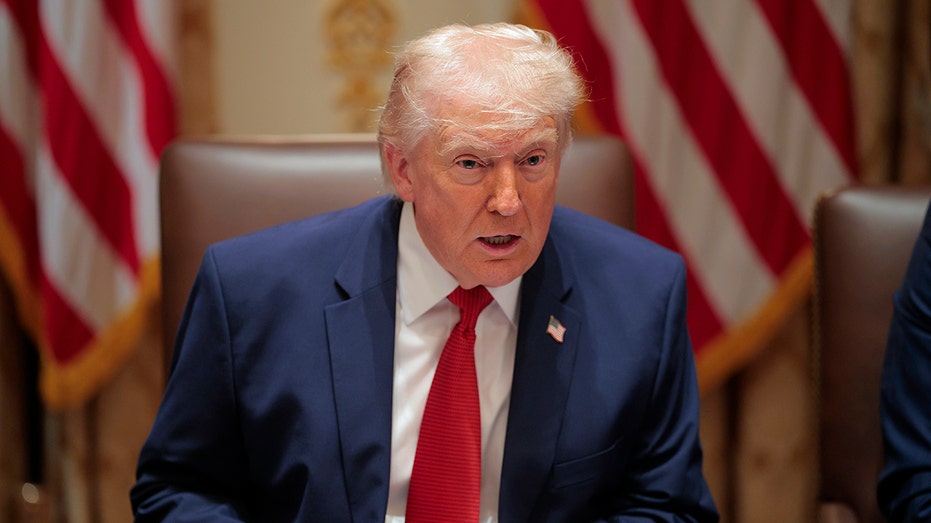
President Donald Trump credited his economic policies for the positive March jobs report. (Chip Somodevilla/Getty Images / Getty Images)
It’s not clear how the war in Iran will affect job numbers going forward as some economists say the March numbers may not fully reflect the new conflict in the Middle East.
"The data is mostly backward-looking, and likely does not incorporate any impact from the recent rise in energy prices, or other risks related to the war in Iran," Thomas Simons, chief U.S. economist with the investment firm Jefferies, wrote in a commentary.
The health care sector led the March job gains, with 76,400 new jobs following the end of a Kaiser Permanente strike in February, as employees returned to work.
"This year will most likely be a year of shifting labor dynamics as artificial intelligence upends the job market, especially for low-skilled roles. We continue to see healthy job opportunities for workers with experience," said Jeffrey Roach, chief economist for LPL Financial.
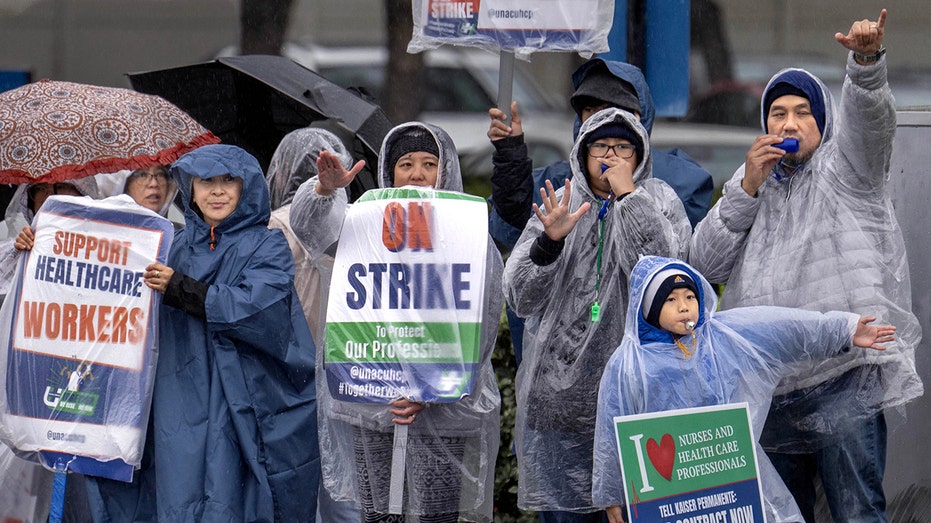
Kaiser Permanente workers on strike in February. (Mindy Schauer/MediaNewsGroup/Orange County Register via Getty Images / Getty Images)
CLICK HERE TO DOWNLOAD THE FOX NEWS APP
"Average hourly earnings rose 3.5% from a year ago, giving consumers enough buying power to overcome nagging inflation. This update on the job market gives the Federal Reserve more time to wait for inflation to decelerate before taking action," Roach added.
The latest jobs data did little to shift the market's expectation that the Federal Reserve is likely to leave interest rates unchanged for the foreseeable future.
Fox Business' Eric Revell and The Associated Press contributed to this report.