


We're looking at an economy that's continuing to grow but employment situation is lagging: Expert
'Making Money' panelists Michelle Girard and Chris Low break down the February Jobs report, the impact on the energy prices from the Middle East crisis and the outlook for the Fed.
This is a developing story about the second reading of fourth-quarter gross domestic product growth. Please check back for updates.
The U.S. economy grew at a slower rate than previously thought in the fourth quarter after the Commerce Department released its first revision of real gross domestic product (GDP) growth for the latest quarter.
The Bureau of Economic Analysis (BEA) released its second estimate of fourth-quarter GDP, which showed the economy grew at a 0.7% rate. That was slower than the 1.4% estimate of economists polled by LSEG, and below the Commerce Department's initial fourth-quarter GDP estimate of 1.4%.
Taken together with the 0.6% GDP contraction in the first quarter of 2025, as well as increases of 3.8% in the second quarter and 4.4% in the third quarter, the U.S. economy grew at an annual rate of about 2.08% in 2025. That figure is subject to change as the BEA will release a final revision to the fourth quarter GDP figure released today as more data comes in.
The BEA noted that the rise in consumer spending and investment boosted real GDP in the fourth quarter, but those gains were partly offset by decreases in exports and government spending. Imports also declined in the quarter.

U.S. GDP grew slower than previously estimated in the fourth quarter amid a government shutdown. (iStock / iStock)
Downward revisions to exports, consumer spending, government spending and investment, as well as imports declining less than previously estimated, contributed to fourth quarter GDP being 0.7 percentage points lower than in the advance estimate.
Real final sales to private domestic purchasers, which is the sum of consumer spending and gross private fixed investment, rose 1.9% in the fourth quarter. That figure was revised down by 0.5 percentage points from the prior estimate.
ENERGY SECRETARY WRIGHT SAYS US COULD SOON ESCORT TANKERS IN STRAIT OF HORMUZ, BUT ‘NOT READY’ YET
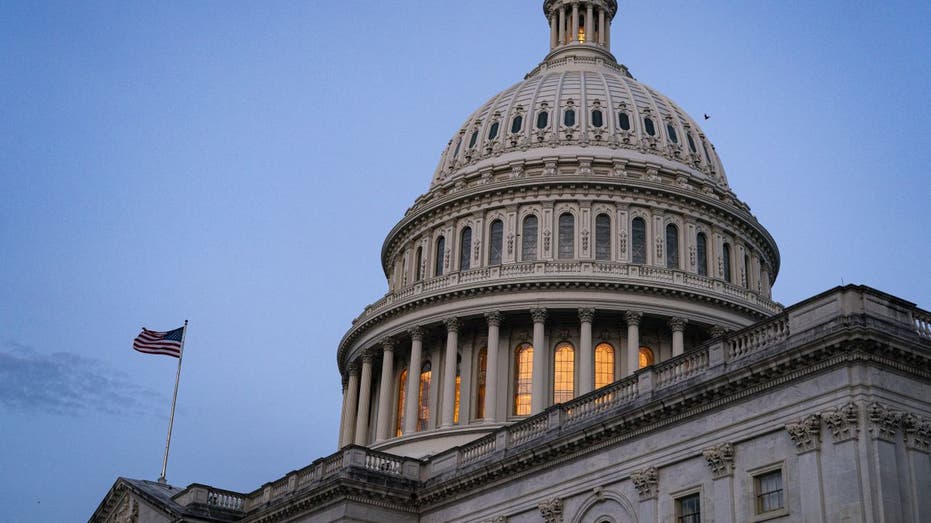
BEA estimated that the 43-day partial government shutdown last fall contributed to lower GDP, though it couldn't quantify the full effect. (Al Drago/Getty Images / Getty Images)
The release of the report was delayed by the partial government shutdown that ran from October until mid-November, which also affected the GDP data because of its impact on the federal government's spending as well as consumer spending by federal workers whose paychecks were delayed.
BEA is unable to quantify the full effects of the shutdown, though it estimated that the reduction in federal government services reduced real GDP growth in the fourth quarter by about 1 percentage point.
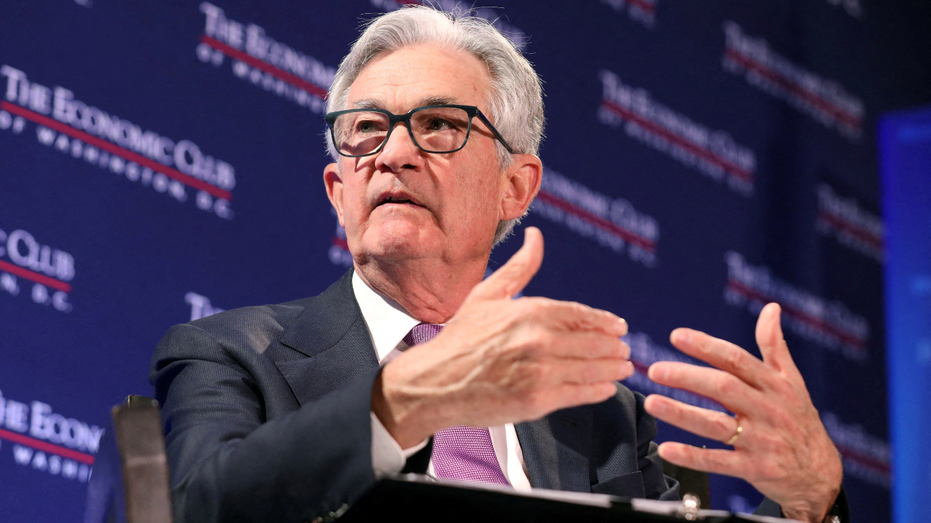
Federal Reserve Chair Jerome Powell and central bank policymakers meet next week. (Amanda Andrade-Rhoades/Reuters / Reuters Photos)
What experts are saying
"With markets laser-focused on oil prices and geopolitics, today's numbers may mostly fly under the radar. Despite signs of economic softening, more sticky inflation data simply strengthens the idea that the Fed will remain on the sidelines," said Ellen Zentner, chief economic strategist for Morgan Stanley Wealth Management.
eToro U.S. investment analyst Bret Kenwell noted that the "downward revisions were broad-based; the most meaningful decline coming from personal consumption, which accounts for roughly two-thirds of U.S. GDP."
"The Fed is now looking at an environment where inflation remains sticky and will soon get an energy-fueled boost, while GDP growth and the labor market continue to lose momentum. That is not an easy setup for aggressive rate cuts unless the economy shows clearer signs of meaningful deterioration," Kenwell added.
GET Gxstocks ON THE GO BY CLICKING HERE