

Trump draws red line as Iran refuses to end nuclear capabilities
Rep. Greg Murphy, R-N.C., discusses President Donald Trump’s Iran warning, the GOP’s new agenda bill and Medicaid fraud concerns in North Carolina on ‘Mornings with Maria.’
The CEO of Saudi Arabia's state-owned oil company is warning that the energy sector will take time to recover from the Iran war's impact on supply as oil output was slashed due to the ongoing disruptions to shipping in the Strait of Hormuz.
Saudi Aramco CEO Amin Nasser said on an earnings call Monday that the global energy market has lost about 1 billion barrels of oil supply during the crisis, though efforts to reroute shipments to avoid using the Strait of Hormuz and releases from countries' strategic petroleum reserves have eased some of the supply issues.
"The energy supply shock that began in the first quarter is the largest the world has ever experienced," Nasser said.
He said that the world is now losing about 100 million barrels of oil supply per week as long as the Strait of Hormuz remains largely closed to tanker traffic. If the disruption continues for several more weeks, Aramco thinks that oil markets may not normalize until 2027.
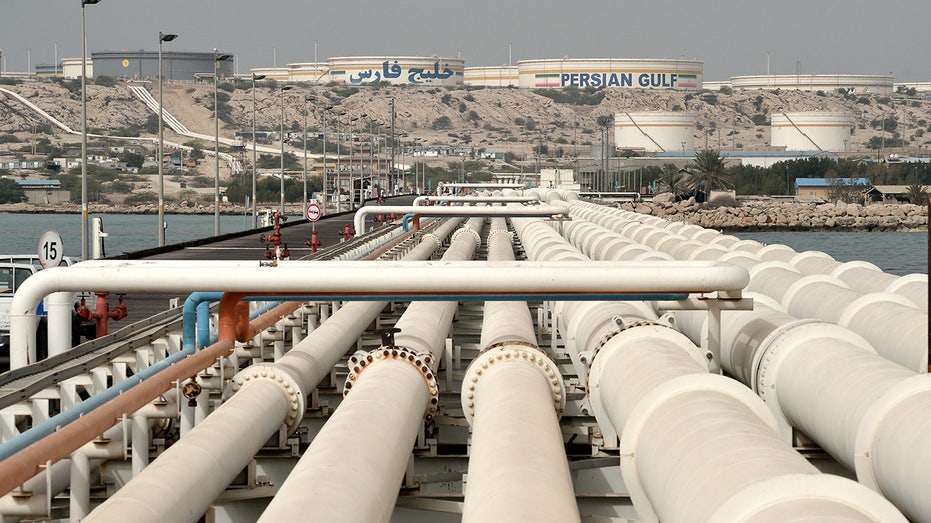
Global oil supplies have contracted due to the Iran war's impact on the supply chain. (Fatemeh Bahrami/Anadolu Agency/Getty Images)
"Reopening routes is not the same as normalizing a market that has been deprived of about 1 billion barrels of oil," Nasser said, adding that years of underinvestment compounded the strain caused by the conflict on global oil inventory.
"Recent events have clearly demonstrated the vital contribution of oil and gas to energy security and the global economy and are a stark reminder that reliable energy supply is critical," he added.
AMERICANS LEAN ON CREDIT CARDS AND BUY NOW, PAY LATER AS GAS PRICES EAT BIGGER SHARE OF INCOME

Saudi Aramco CEO Amin Nasser, center, said the global energy market has lost about 1 billion barrels of oil due to the closure of the Strait of Hormuz. (Stefani Reynolds/Bloomberg via Getty Images)
The conflict prompted Aramco to ramp up the use of its pipeline that transits the Arabian Peninsula from east to west and negates the need for oil tankers to transit the Strait of Hormuz, through which about 20% of the world's oil supply passed through before the war began.
"Our East-West pipeline, which reached its maximum capacity of 7 million barrels of oil per day, has proven itself to be a critical supply artery, helping to mitigate the impact of a global energy shock and providing relief to customers affected by shipping constraints in the Strait of Hormuz," Nasser said on the call.
GAS PRICES SURGE PAST $4.50 NATIONALLY AS IRAN TENSIONS PRESSURE DRIVERS
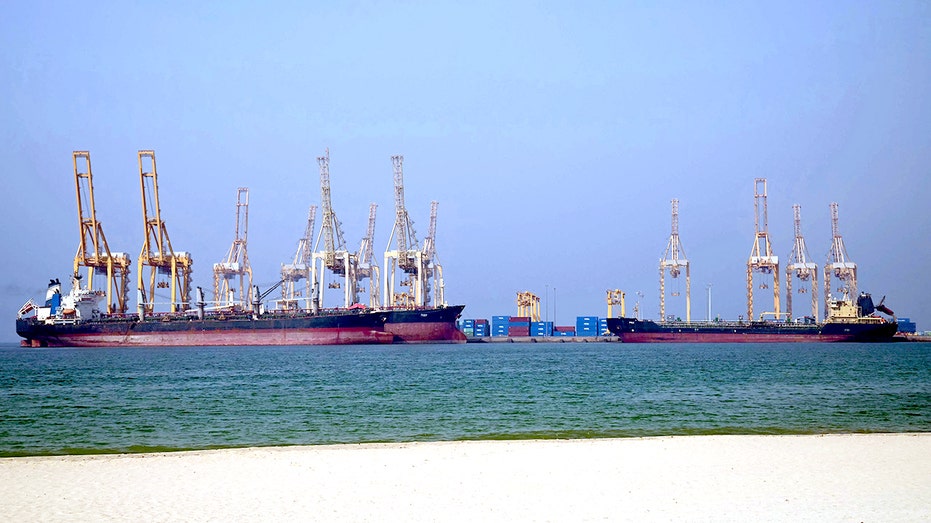
Oil tankers have come under attack from Iran while in the Strait of Hormuz, causing a sharp drop in shipments through the choke point. (Giuseppe Cacace/AFP via Getty Images)
Of the 7 million barrels per day the pipeline handles, about 2 million go to oil refineries located on Saudi Arabia's western coast, while the remaining 5 million barrels per day are available for exports.
Nasser said that Aramco is considering ways to expand its export capacity at Yanbu, the terminal on the Red Sea that serves as the pipeline's destination.
Saudi Arabia cut oil output by 2 million barrels per day after Iran threatened shipping traffic in the Strait of Hormuz, which effectively closed the vital choke point.
GET Gxstocks ON THE GO BY CLICKING HERE
Reuters contributed to this report.