
Fed rate hike: What it could mean for your money and the economy
Former Trump Treasury official Christina Skinner discusses the economic impact of a potential Fed rate hike and how President Donald Trump could respond.
This story about the September 2026 FOMC meeting will be updated with further details.
The Federal Reserve on Wednesday raised its benchmark interest rate for the first time in over three years amid concerns over stubborn inflation that has been driven recently by higher energy prices.
Fed policymakers voted 12-0 to raise the federal funds rate from a range of 3.5% to 3.75% to a new target rate of 3.75% to 4%. The 25-basis-point increase marks the first interest rate hike since July 2023 and comes after the Fed left rates unchanged at its first five meetings this year.
The Federal Open Market Committee (FOMC), the central bank's panel responsible for monetary policy moves, noted that "Economic activity is expanding at a solid pace. While uncertainty remains elevated owing, in part, to geopolitical developments, domestic spending has been resilient. Productivity growth is strong, and capital investment is robust."
"Job gains have kept pace with the workforce, and the unemployment rate has changed little. Inflation remains elevated. Today's policy action will support a timelier return to the Committee's 2% goal," the FOMC added.
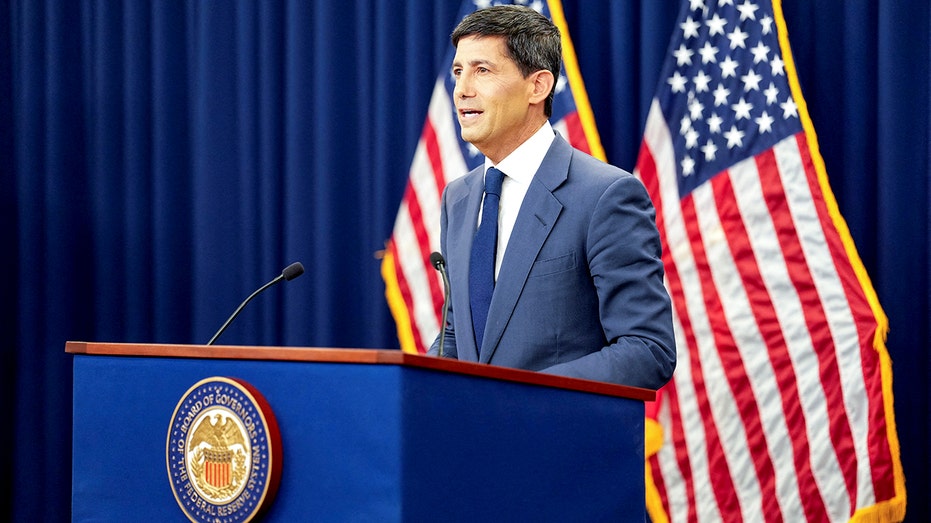
Federal Reserve Chair Kevin Warsh will discuss the interest rate hike at a press conference. (Eric Lee/Reuters)
The FOMC's rate hike announcement was accompanied by a summary of economic projections made by policymakers. The median member of the panel projected one more 25-basis-point rate hike this year, as the FOMC is set to meet again in October and December.
Fed Chair Kevin Warsh will hold a press conference at 2:30 p.m. ET.